Service
Catalogue website development for complex product ranges.
Clear information architecture, fast search, SEO-aware filters, enquiry journeys, and a manageable CMS.
A catalogue that helps people find the right option.
A catalog website fits manufacturers, distributors, and B2B companies that need to present a large range without online checkout. We start with the selection logic: categories, attributes, filters, search, and the quote-request journey. The structure reflects search demand, so categories and landing pages do not need rebuilding after launch.

When a catalog website beats an online store
A catalog website suits a business that wants to present its range, services, or technical solutions clearly but does not necessarily accept payment online. Manufacturers, distributors, B2B companies, and brands with a complex choice need this format: customers study specifications, compare options, and send a request to a manager.
When building a catalog website, the key question is how users find what they need: through categories, search, filters, product series, industries, or use cases. This shapes the page structure, content, navigation, and future SEO. If the business later needs online sales, the catalogue can grow into ecommerce without rebuilding the whole logic.

What catalogue development includes
- audience and product-structure research;
- UX prototypes for catalogue, product pages, and enquiries;
- responsive UI and a component design system;
- data imports and CRM or ERP integrations;
- technical SEO, structured data, and filter indexation rules.
A catalogue structure that works for customers and search
A catalogue has to work both for buyers and for the team that manages it. We design categories, product pages, attributes, files, related items, request forms, and clear contact points. For complex ranges, we define filtering and indexation rules separately so that technical parameters help people find a product instead of creating duplicate pages.
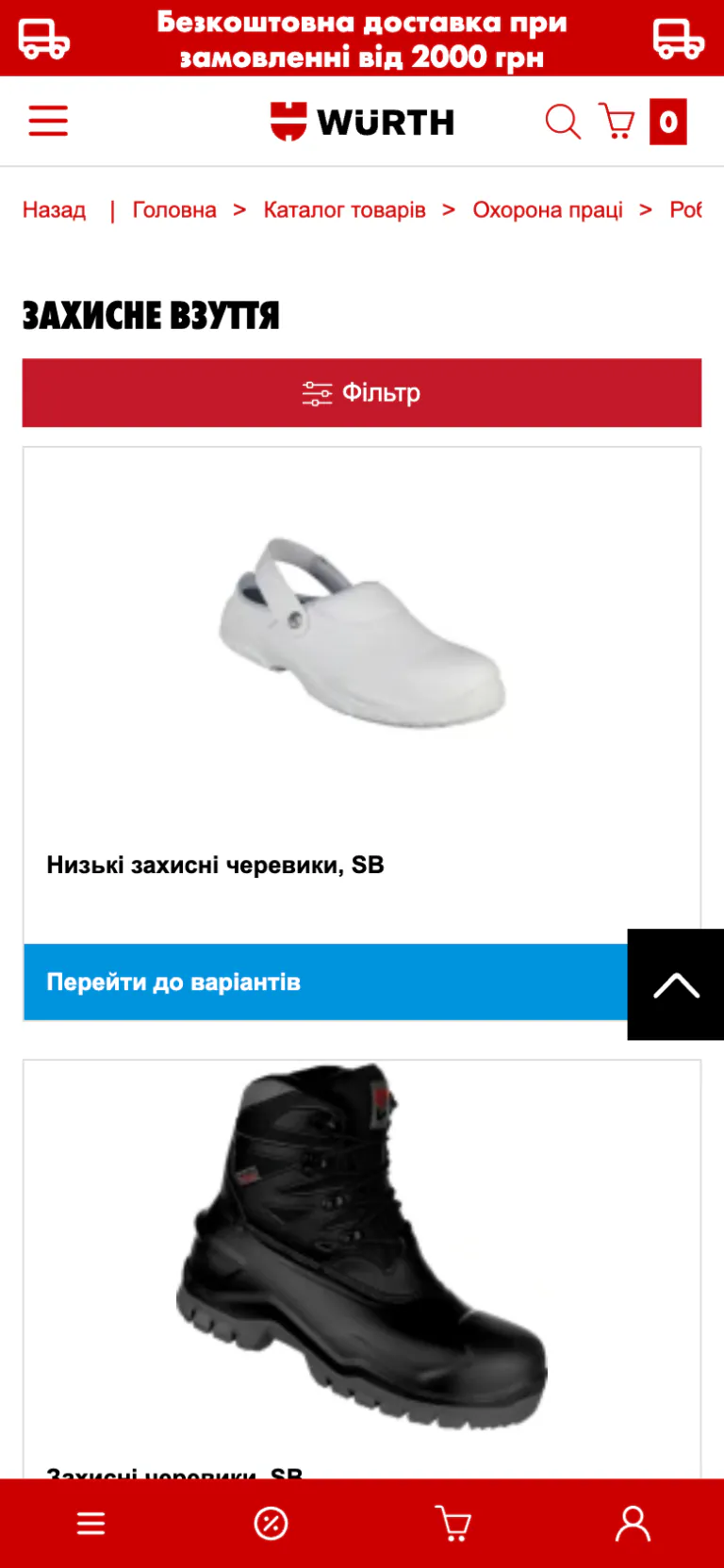
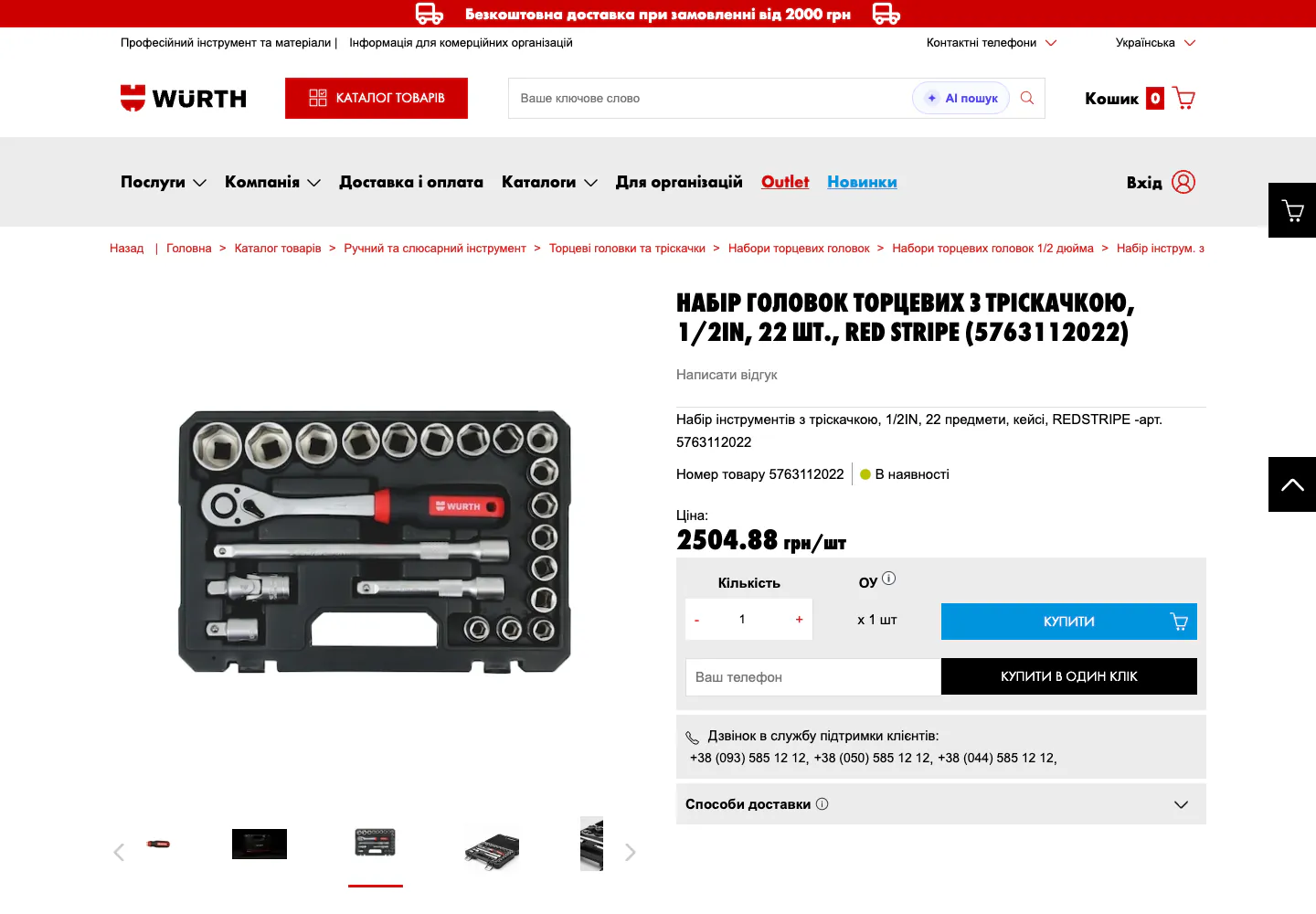
After launch, an editor can add items and update content in the CMS. We check the mobile journey, speed, metadata, and the key paths to an enquiry, so the catalog website supports sales and communication rather than acting as an electronic brochure. For an example of a B2B catalogue, see the Würth Ukraine case.
What the catalogue is built on
The business outcome
Customers quickly find a relevant item and send a substantive enquiry, while the team manages attributes, documents, and categories in the admin panel. The architecture is ready to grow into an online store later.
Catalog website development cost
Catalog website development starts from $2,000. The final price depends on the size of the range, filters and search, integrations, and languages. We fix the exact budget after a short brief. Our guide to website costs lists starting prices for every format and explains what drives the budget.
Catalog website FAQ
01How is a catalog website different from an online store?
A catalogue presents the range, specifications, and use cases but does not have to accept online payment. It suits manufacturers, distributors, and B2B companies where a purchase needs a consultation, a calculation, or a price request. An online store adds a cart, checkout, and the operational processes of selling.
02How do you organise a large catalogue of products or services?
Start with the customer’s selection logic: categories, attributes, series, industries, filters, and search. What matters is a clear path to the right item, not the number of sections. This architecture affects UX, content, data import, and SEO, so it should be worked out before design and development.
03Can we manage products, attributes, and documents in the CMS?
Yes. A catalogue can have an admin area for categories, product pages, attributes, documents, and content. If the data already lives in a CRM or ERP, we define a possible import or integration during design. This reduces the risk of manual duplication and inconsistent data.
04Can a catalog website later become an online store?
Yes, if the architecture allows for it: clear product pages, structured attributes, managed data, and customer interaction scenarios. But the option to scale does not mean adding every ecommerce feature at once. It is better to launch the scenario the business needs now and avoid unnecessary complexity.
Next step
Planning a catalog website?
Tell us about your range, where the data lives, and how customers request prices. We will clarify the scope and the risks.